
Safety/Workers’ Comp

Gears

Managing Your Safety and Workers' Compensation Program

With our own workers’ compensation third-party administration company — OMA Workers’ Compensation Services — no association is better equipped in the areas of safety and workers’ comp management.

We keep members apprised of OSHA updates; changes in the regulatory environment; updates from the Bureau of Workers’ Compensation and Industrial Commission; and content applicable to claims management. We also publish safety training opportunities from a variety of sources, including the OMA’s own monthly safety webinars.

This is another important service in the OMA’s efforts to protect and grow Ohio manufacturing!


Partners

Partner logo
Partner logo
Safety/Workers' Comp News and Analysis
August 28, 2026

Ohio employers have just days left to complete their Ohio Bureau of Workers’ Compensation (BWC) payroll true-up before the Monday, Aug. 31 deadline.

Businesses must report actual payroll for the policy year that ended June 30 and pay any balance due. Missing the deadline could mean removal from a 2026/2027 BWC discount program and could also jeopardize eligibility for the proposed 2026 dividend, equal to 90% of premium paid in the 2022/2023 policy year.

“There’s real money tied to getting this done on time,” said Juliet Walker, managing director of workers’ compensation services at the Ohio Manufacturers’ Association (OMA). “If you haven’t completed your true-up yet, now is the time. Waiting until after Monday could cost you discounts and potentially a dividend.”

Employers can complete the true-up through BWC’s online Payroll True-up Reporting Service. OMA members with questions should contact Juliet Walker or Crystal Myers for assistance. 8/28/2026

August 28, 2026

Good news is hitting employer mailboxes early this year.

The Ohio Bureau of Workers’ Compensation (BWC) has issued annual Group Retrospective Rating rebates for employers that participated in Group Retro in 2022, 2023 or 2024. The rebates were posted to employer accounts and mailed Aug. 20, weeks ahead of the usual late-October or early-November schedule.

“Any time money comes back to employers sooner than expected, that’s a good day,” said Juliet Walker, managing director of workers’ compensation services at the Ohio Manufacturers’ Association (OMA). “Members should keep an eye out for their BWC correspondence and review their results.”

OMA is also pressing BWC for clarity on whether additional rebates may be available for the 2018/2019 policy year following the recent State ex rel. Kent Elastomer Products, Inc. v. McCloud ruling.

One important caution. OMA recommends employers do not sign any contract or agreement related to potential 2018/2019 rebates until additional guidance is available directly from BWC and OMA.

Members with questions should contact Juliet Walker or Crystal Myers. 8/25/2026

August 28, 2026

A machine guard can look fine and still fail when it matters.

On Thursday, Sept. 3, the Ohio Manufacturers’ Association (OMA) will host a one-hour webinar examining why safeguards break down over time, what inspections should catch and how manufacturers can keep fixes from becoming temporary.

Safex Safety Consultant Chris Stillion will lead the session, drawing on experience as a former plant manager who oversaw custom machine guard fabrication and workplace safety compliance.

“Installing a guard is not the end of the job,” said Jacob Sargent, director of public policy services for the OMA. “The real challenge is making sure it still works months or years later, after equipment changes, production changes and normal wear and tear.”

The webinar runs from 10 a.m. to 11 a.m. and counts for one hour of Ohio Bureau of Workers’ Compensation-mandated training for companies required to comply. 8/26/2026

August 21, 2026

BWC safety grant dollars are back on the table.

The Ohio Bureau of Workers’ Compensation has reopened its Safety Grants program, making more than $41 million available in fiscal year 2027 after overwhelming demand forced the program to pause in March. Eligible employers can now apply for grants supporting equipment and other investments designed to reduce workplace injuries.

“This is money manufacturers should take a serious look at,” said Jacob Sargent, director of public policy services at the Ohio Manufacturers’ Association. “If you’re already considering an investment that could make your workplace safer, BWC may be able to help offset the cost. With demand strong enough to pause the program earlier this year, employers should not assume these dollars will sit around.”

Members considering a safety investment are encouraged to review BWC’s eligibility requirements and available grant programs. 8/17/2026

August 21, 2026

Machine guarding problems can become injury claims fast. On Sept. 3 from 10 to 11 a.m., Safex Safety Consultant Chris Stillion will walk through how to spot inadequate safeguards, understand why guarding fails and keep fixes in place over time.

The webinar will cover guard types, inspection tips, common failure points and practical ways to sustain effective machine safeguarding.

“Machine guarding is one of those areas where small problems can have serious consequences,” said Jacob Sargent, director of public policy services for the Ohio Manufacturers’ Association. “The goal is to identify those risks before someone gets hurt and make sure the safeguards in place continue doing their job.” 8/21/2026

August 21, 2026

The Occupational Safety and Health Administration (OSHA) has renewed its National Emphasis Program targeting warehousing and distribution center safety, extending the enforcement initiative through at least 2031. The program directs inspectors to focus on hazards including powered industrial vehicles, material handling, walking-working surfaces, exits, fire protection, heat and ergonomics.

Manufacturers with warehousing or distribution operations should review individual facilities to determine whether they may fall within the program. OSHA can evaluate the operations and classification of a specific establishment rather than relying solely on a company’s primary NAICS code.

“This is a good reminder that OSHA is still looking closely at the basics,” said Jacob Sargent, public policy services manager at the Ohio Manufacturers’ Association. “If you operate a warehouse or distribution facility, make sure your housekeeping, equipment practices and safety procedures are in order before an inspector walks through the door.” 8/17/2026

August 14, 2026

Ohio employers have until Monday, Aug. 31, to complete their BWC payroll true-up for the policy year that ended June 30.

Employers must report actual payroll and pay any balance due by the deadline. Missing it could result in removal from a current BWC discount program and may also affect eligibility for the proposed 2026 dividend.

“This is a simple deadline, but missing it can have real consequences,” said Juliet Walker, managing director of workers’ compensation services at the Ohio Manufacturers’ Association. “Employers could put their current discounts and potential dividend at risk. Our advice is to get the true-up completed now, and call us if you need help.”

OMA Workers’ Compensation Services can help members complete the true-up and answer questions before the Aug. 31 deadline. Contact Juliet Walker or Crystal Myers for assistance. 8/13/2026

August 7, 2026

Ohio’s workers’ compensation system has delivered historically low rates and billions of dollars in employer dividends. In a new Crain’s Cleveland Business commentary, Jacob Sargent, director of public policy services for the Ohio Manufacturers’ Association, argues the next governor should protect that progress rather than dismantle a system that is working.

The Sandusky Register editorial board echoed that message this week, warning Ohio’s next governor against meddling with a system that is producing strong results for employers and injured workers.

Sargent writes that the proposed $1 billion dividend from the Ohio Bureau of Workers’ Compensation is not government generosity but responsible stewardship of money paid by employers. Once injured workers are protected and long-term obligations are secured, surplus funds should return to the businesses that funded the system.

He also warns that privatization would not automatically lower costs or improve outcomes. It would simply transfer control to insurers that must generate returns for shareholders.

“Ohio should judge the system by its performance, not by ideology,” Sargent wrote. “A system producing those results does not need to be dismantled. It needs discipline, transparency and continued improvement.” 8/5/2026

August 7, 2026

Safex has named Ryan Moon president, while Dianne Grote-Adams has moved into the role of CEO and will remain owner. Moon will lead the company’s day-to-day direction as Grote-Adams continues providing strategic leadership and helping shape its future. Safex said the transition builds on years of collaboration and will preserve the culture and commitment to workplace health and safety that Grote-Adams has developed over more than three decades.

Many Ohio Manufacturers’ Association (OMA) Workers’ Compensation Services members know Grote-Adams through Safex’s monthly safety webinars.

“Dianne has been a trusted safety resource for Ohio manufacturers for years,” said Jacob Sargent, director of public policy services for the OMA. “We appreciate everything she has brought to our members and look forward to working with her and Ryan in this next chapter.” 8/6/2026

July 31, 2026

Gov. Mike DeWine has asked the Ohio Bureau of Workers’ Compensation (BWC) Board of Directors to approve a projected $1 billion dividend for Ohio employers.

The proposed payment reinforces a clear record of results. Ohio employers are paying the lowest workers’ compensation rates in more than 65 years, including a 1% private-employer rate reduction that took effect July 1, while BWC remains financially strong enough to return substantial surplus funds to the businesses that paid them.

“This is what a well-managed workers’ compensation system should do,” said Jacob Sargent, director of public policy services for the Ohio Manufacturers’ Association. “Protect injured workers, maintain the financial strength to meet future obligations and return excess funds to the employers who paid them. The next governor should look at these results and build on them, not dismantle a system that is delivering historically low rates and returning billions of dollars to Ohio employers.”

The dividend would equal approximately 90% of premiums paid during the 2022 policy year. If approved in August, it would bring total BWC dividends under the DeWine administration to $10.2 billion, with the typical employer receiving more in dividends since 2019 than it paid in premiums during that period.

OMA has urged Ohio’s next governor to protect the reforms that strengthened the system, improved transparency and helped produce these results.

Employers that have not completed their 2022 policy-year true-up or have a lapsed status may be ineligible for the dividend. They have until Friday, Aug. 28 to resolve those issues. 7/30/2026

July 24, 2026

Artificial intelligence can help safety teams draft procedures, training materials and other documents more efficiently. But before those materials reach the shop floor, they must be reviewed by someone who understands the actual equipment, hazards and work practices involved.

EHS Today warns that AI-generated safety content can look polished while missing critical details, especially for lockout/tagout, forklift operation, confined-space entry, fall protection and other high-hazard work.

Members should treat AI as a drafting tool, not a final authority. Verify the sources, compare the guidance with current policies and equipment, and make sure employees can perform the task safely.

“AI may save time, but it does not transfer responsibility,” said Jacob Sargent, director of public policy services for the Ohio Manufacturers’ Association. “Any safety document that could matter after an injury or inspection still requires knowledgeable human review and must reflect the actual equipment, hazards and work being performed.” 7/21/2026

July 17, 2026

The 2027-28 workers’ compensation enrollment season is right around the corner.

The Ohio Manufacturers’ Association (OMA) is Ohio’s only BWC-certified third-party administrator dedicated exclusively to serving the manufacturing industry. For more than 20 years, the OMA has built its workers’ compensation services around the needs of its members. Today, more than two-thirds of eligible OMA members trust our team to manage their claims.

“Manufacturers should not have to explain their operations to a generic claims administrator,” said Nate Mays, OMA managing director of workers’ compensation services. “The OMA already understands the work, the risks and what is at stake. That difference shows up when a claim hits.”

Group discount program deadlines begin this fall, making now the right time to explore the full value of OMA Workers’ Compensation Services.

Submit an updated AC-3 form today to request a no-obligation review and learn how the OMA can improve your workers’ compensation experience. 7/16/2026

July 17, 2026

The U.S. Department of Labor plans to revisit several major workplace rules this year, including OSHA’s proposed standard for protecting employees from heat hazards in indoor and outdoor workplaces.

OSHA expects to issue a supplemental proposal by December, signaling that significant changes may be coming after employers raised concerns that the original rule was overly prescriptive and failed to account for differences among workplaces.

“Manufacturers should not assume the heat rule has stalled,” said Jacob Sargent, director of public policy services for the Ohio Manufacturers’ Association. “A revised proposal could still create significant new compliance obligations for indoor and outdoor workplaces, so employers should continue strengthening heat-safety programs while watching closely for what OSHA changes.”

The department’s broader regulatory agenda also includes potential updates involving lockout/tagout, independent-contractor classifications and child-labor rules. 7/14/2026

July 10, 2026

Workplace safety is not only a compliance responsibility. It can also be a competitive advantage.

New research cited by Manufacturing Today found that 92% of U.S. and Canadian workers believe a safer workplace makes them more productive. More than three-quarters said safety would influence their choice of employer, while 78% would consider leaving a job because of unsafe working conditions.

“Manufacturers know strong safety programs do more than prevent injuries,” said Jacob Sargent, director of public policy services for the Ohio Manufacturers’ Association. “They reduce disruptions, strengthen retention and improve productivity across the operation.”

The findings reinforce the value of making safety part of everyday plant operations, particularly as manufacturers compete to attract and retain skilled workers. 7/8/2026

July 1, 2026

With the Fourth of July approaching, employers can help workers and families keep safety top of mind before the long holiday weekend.

The U.S. Consumer Product Safety Commission reported that fireworks were involved in 15 deaths and an estimated 13,000 injuries nationwide last year. Prevent Blindness Ohio has also declared June 28 through July 4 as Fireworks Safety Week to raise awareness about the risks tied to consumer fireworks, including severe eye injuries and burns.

Employers are encouraged to remind workers to follow local laws, keep fireworks away from children, avoid relighting malfunctioning fireworks, keep water nearby and leave larger displays to trained professionals.

“Safety does not stop when the workweek ends,” said Jacob Sargent, director of public policy services for the Ohio Manufacturers’ Association. “A quick reminder before the holiday can help employees and their families avoid injuries that are preventable, painful and sometimes life-changing.”

A safe holiday weekend starts with planning, caution and common sense. 7/1/2026

June 26, 2026

Federal officials are continuing to review whether marijuana should be moved from Schedule I to Schedule III under the Controlled Substances Act, with a DEA hearing scheduled to begin June 29.

The proposal has generated significant attention, but employers should be careful not to treat it as a final decision. Marijuana remains a Schedule I controlled substance under federal law, and no federal rescheduling has been approved or implemented.

“Proposed is not final, and rescheduled is not legal,” said Jacob Sargent, director of public policy services for the Ohio Manufacturers’ Association. “Employers should not weaken workplace safety policies based on speculation. Until federal law changes, marijuana remains a Schedule I controlled substance, and existing drug-free workplace and testing policies remain valid.”

If marijuana is eventually moved to Schedule III, the change would not make marijuana federally legal. Existing workplace drug testing programs, drug-free workplace policies and Department of Transportation testing requirements remain unchanged.

Employers should continue to follow current law, safety considerations, regulatory requirements and applicable state-specific marijuana laws. 6/22/2026

June 26, 2026

At its June meetings, the Ohio Bureau of Workers’ Compensation (BWC) presented a proposal that would significantly change how private employers are rated beginning July 1, 2027. The plan would reintroduce Group Break-Even Factors, raise the credibility cap and reduce premium size credits in an effort to narrow a long-running performance gap between group-rated and individually rated employers. After significant questions from stakeholders, the Actuarial Committee tabled the proposal for further review.

The Ohio Manufacturers’ Association (OMA) agrees that any disparity in the rating system deserves careful examination. The concern is not whether the issue should be addressed, but whether employers have been given enough information to evaluate the proposed solution.

According to BWC’s own materials, the proposal represents only the first phase of a broader effort that could increase group-rated employers’ premiums in future years. Yet employers have been shown projected outcomes without the detailed methodology needed to fully understand how those impacts were calculated.

There is also no immediate need for action. The State Insurance Fund remains financially strong, the proposal is revenue neutral overall and a business-community study already underway is expected to provide additional insight into the issue.

“Manufacturers support a workers’ compensation system that is fair, transparent and based on sound data,” said Jacob Sargent, OMA director of public policy services. “If the Bureau is asking employers to accept significant changes to how they are rated, employers should be able to see the full analysis behind those changes. With a study already underway and no financial pressure to act immediately, taking the time to get this right is the responsible course.”

OMA will remain engaged as the proposal returns to the Actuarial Committee and will continue advocating for a transparent, data-driven approach that gives employers confidence in any future changes to the rating system. 6/22/2026

June 19, 2026

A safety incident, a wave of turnover, a supplier failure — reputation risk in manufacturing doesn’t announce itself. It builds quietly until you’re scrambling to respond. Ohio Manufacturers’ Association member Akhia breaks down the risks most manufacturers overlook and what it actually takes to protect your reputation before you need to. 6/19/2026

June 19, 2026

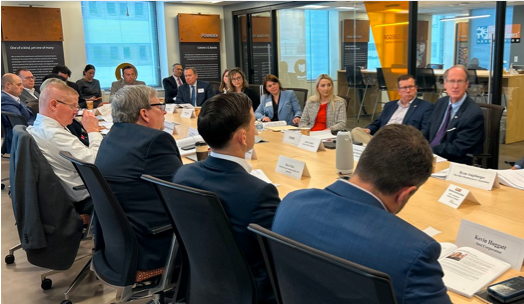
Workers’ compensation decisions affect what manufacturers pay, how claims are managed and how employers support safe workplaces. That is why the Ohio Manufacturers’ Association (OMA) stayed engaged this week as the Ohio Bureau of Workers’ Compensation Board of Directors held committee discussions in Columbus.

The meetings covered investment, actuarial, audit, medical services and safety issues tied to the oversight of one of Ohio’s most important employer-facing systems. Jacob Sargent, OMA director of public policy services, attended on behalf of manufacturers.

“Workers’ compensation policy shows up on the shop floor and on the balance sheet,” Sargent said. “Manufacturers need a system that supports safe workplaces, fair claims outcomes and predictable costs. OMA’s role is to stay close to these discussions so members have a voice when decisions affect how they manage risk, protect employees and operate in Ohio.” 6/18/2026

June 19, 2026

The Ohio Manufacturers’ Association (OMA) participated this week in the Ohio Self-Insurers Association’s 2026 Annual Conference in Westerville, where employers, claims professionals and workers’ compensation leaders focused on the issues that directly affect Ohio’s self-insured community. OMA was represented by Juliet Walker, managing director of workers’ compensation services; Crystal Myers, account manager, workers’ compensation services; and Nate Mays, director of member services.

The conference covered practical topics tied to workplace safety, claims management, compliance and employer cost control, including reasonable suspicion, ergonomics and Ohio Bureau of Workers’ Compensation self-insured operations.

“Manufacturers do not need workers’ comp theory. They need answers that help them manage claims, control costs and keep people safe,” said Walker. “Being in the room with Ohio’s self-insured community helps OMA bring practical insight back to our members and make sure our services stay aligned with what employers are actually facing.” 6/18/2026

Get Started Today

Interested in taking advantage of the OMA Workers’ Compensation Services?

Top