

Environment

Gears

Keep Up With Environmental Developments

Because environmental regulations are among the many challenges faced by manufacturers, the OMA’s Environment Management Community helps keep members informed with timely published information, regular Environment Policy Committee meetings, and other learning opportunities. The OMA helps members focus on the critical details, linking them to subject-matter experts who know manufacturing.

Protecting and growing Ohio manufacturing has never been more important!

Partner

Partner logo
Environment News and Analysis
April 10, 2026

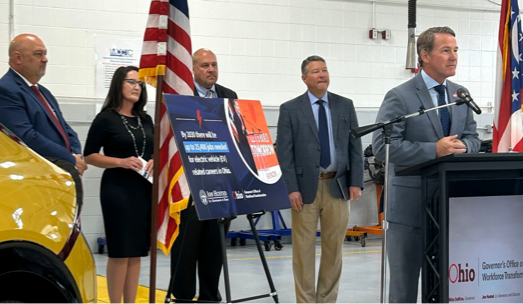
The U.S. Environmental Protection Agency (EPA) on Wednesday proposed redesignating the Cleveland region to attainment for the 2015 federal ozone standard, marking an important milestone for air quality and economic development in Northeast Ohio.

Speaking at the announcement, James Lee, the managing director of public policy services for the Ohio Manufacturers’ Association, said the decision reflects decades of investment by manufacturers in cleaner, more efficient operations and a long-term commitment to environmental progress.

“Ohio manufacturers have shown you can grow the economy while dramatically reducing emissions,” Lee said. “The proposed redesignation recognizes real environmental progress while providing the regulatory certainty businesses need to keep investing and creating jobs.”

Lee said the milestone shows what is possible when environmental progress and economic growth move forward together, giving manufacturers greater confidence to invest, expand and compete in northeast Ohio. 4/8/2026

April 10, 2026

Environmental policy changes with growing implications for Ohio manufacturers drove Thursday’s Ohio Manufacturers’ Association (OMA) Environment Committee meeting, where regulators, attorneys and industry leaders examined what is changing and what it means for business.

Ohio Environmental Protection Agency (EPA) Director John Logue outlined how the agency is aligning Ohio’s regulatory approach with evolving U.S. EPA priorities, including heightened scrutiny of PFAS and new federal air regulations that could affect industrial operations.

Former Ohio EPA Director Chris Jones of Calfee, Halter & Griswold examined potential changes to the 2009 Endangerment Finding and what shifting greenhouse gas reporting requirements could mean for manufacturers making long-term investment decisions.

OMA staff and legal counsel also briefed members on legislative and regulatory developments affecting environmental compliance in Ohio.

“Environmental policy is shifting quickly, and manufacturers need a clear view of what is changing, what is coming and where Ohio fits in,” said James Lee, OMA managing director of public policy services.

The takeaway was unmistakable. Regulatory change is accelerating, and manufacturers need to stay ahead of it. 4/9/2026

April 10, 2026

Federal scrutiny of PFAS and related contaminants is intensifying as Ohio manufacturers continue pressing for a more workable approach in Columbus. The U.S. Environmental Protection Agency (EPA) would add microplastics and pharmaceuticals to its sixth Contaminant Candidate List, beginning a new phase of monitoring under the Safe Drinking Water Act and helping shape what future drinking water regulation could look like. The move follows a petition from seven governors and 175 environmental and health groups, and that EPA also plans human-health benchmarks for 374 pharmaceuticals. The pressure is building as the Ohio Manufacturers’ Association (OMA) warns House Bill 272 still threatens manufacturers with compliance uncertainty, supply chain disruption and sweeping future rulemaking authority over PFAS-containing products.

“Federal scrutiny is clearly moving in one direction, and that makes it even more important for Ohio to avoid a policy response that creates more confusion than clarity,” said James Lee, OMA managing director of public policy services. “Manufacturers need a science-based approach that protects health, preserves essential chemistries and gives businesses a workable path to comply.” 4/6/2026

April 10, 2026

The Ohio Manufacturers’ Association (OMA) is engaging early as Ohio Environmental Protection Agency (EPA) begins reviewing water-quality rules that could affect permits, compliance obligations and operating flexibility for manufacturers in parts of the state. OMA submitted comments during the agency’s early stakeholder outreach on potential updates to beneficial use designations in the Maumee, Ashtabula and Muskingum drainage basins and asked to stay involved as draft rule language is developed.

Those designations help determine the water-quality standards applied to specific rivers, streams and other surface waters, shaping permit limits and Section 401 water-quality certifications. Ohio EPA said the review could revise classifications for certain waters, add currently undesignated waters to the rules and verify existing designations as part of the agency’s required five-year review.

Because more stringent classifications can directly affect permitting flexibility and costs, early engagement helps ensure the process remains transparent, workable and grounded in practical conditions. 4/7/2026

April 3, 2026

The Ohio Manufacturers’ Association (OMA) will open its 2026 Environment Committee schedule this Thursday, April 9 with a gathering focused on the policy and regulatory changes shaping manufacturers’ environmental obligations in Ohio. Ohio Environmental Protection Agency (EPA) Director John Logue will discuss federal-state alignment around U.S. EPA priorities, including PFAS and air regulations. Former Ohio EPA Director Chris Jones of Calfee, Halter & Griswold will provide an outlook on changes to the 2009 Endangerment Finding and evolving greenhouse gas reporting requirements. OMA staff and legal counsel also will report on legislative and regulatory developments affecting manufacturers.

“Environmental policy is shifting quickly, and manufacturers need a clear view of what is changing, what is coming and where Ohio fits in,” said James Lee, OMA managing director of public policy services.

Register now to join OMA in person or via Zoom. 4/3/2026

April 3, 2026

The Ohio Manufacturers’ Association (OMA) yesterday welcomed a U.S. Environmental Protection Agency (EPA) decision handing Ohio the lead on hazardous waste permitting, calling it a smart shift that should cut red tape and give manufacturers more certainty.

The announcement was made in Zanesville, where U.S. EPA Regional Administrator Anne Vogel joined Ohio EPA Director John Logue and U.S. Rep. Troy Balderson to mark the change. U.S. EPA said Ohio is now the primary permitting authority for all aspects of hazardous waste permits under the Resource Conservation and Recovery Act, while the program will continue to operate under federal standards. OMA President Ryan Augsburger said the change should help create a clearer, more predictable permitting process for manufacturers making decisions about investment and growth in Ohio.

“Putting Ohio EPA in the lead is smart government,” Augsburger said in the EPA announcement. “Consolidating RCRA permitting at Ohio EPA cuts red tape, reduces duplication and gives manufacturers more certainty to invest and grow in Ohio.” 4/2/2026

March 27, 2026

The Ohio Manufacturers’ Association (OMA) is weighing in on a proposed update to Ohio’s air permitting rules that would restore an “emergency defense” for facilities operating under the Clean Air Act. The provision would protect manufacturers from penalties when unavoidable equipment failures or other emergency events temporarily push emissions above permit limits.

The proposal follows a recent court decision in SSM Litigation Group v. Environmental Protection Agency (EPA), which sent Ohio EPA back to its rules. Restoring the emergency defense would bring back an important safeguard when violations are driven by events a facility cannot reasonably prevent, not routine noncompliance.

“This is about recognizing the difference between a true emergency and a preventable violation,” said James Lee, managing director of public policy services for the OMA. “Manufacturers should be held to high standards, but they should not face penalties for events outside their control when they respond appropriately and remain committed to compliance.”

OMA supports reinstating the provision and is working with Ohio EPA to ensure the final rule is clear, fair and practical to administer. 3/27/2026

March 27, 2026

The Ohio Manufacturers’ Association (OMA) is pressing Ohio EPA on proposed changes to the state’s NOx emissions rules that would clarify key definitions, reshape which facilities are covered and reset compliance timelines under the Clean Air Act. A key revision to the definition of “potential to emit” could change whether certain manufacturers are subject to stricter requirements.

The proposal could shift regulatory obligations and compliance timing in ways that carry real operational and cost consequences. Ohio EPA says the changes are intended to address past inconsistencies, and OMA is pushing to make sure the final rules are clear, fair and workable for manufacturers.

“These are the kinds of technical rule changes that can carry major consequences for manufacturers,” said James Lee, managing director of public policy services for the OMA. “When definitions shift, compliance obligations can shift with them. The rules need to be clear, predictable and grounded in how facilities actually operate.”

OMA is staying engaged as the rulemaking moves forward to help ensure the final requirements are consistent, practical and realistic to implement. 3/26/2026

March 27, 2026

Blue state attorneys general and big city governments, including Columbus and Cleveland, are suing the Trump administration over the U.S. Environmental Protection Agency’s repeal of the 2009 endangerment finding, the Obama-era legal basis for most federal greenhouse-gas rules.

Ohio was not among the states that joined the case. The repeal could erase greenhouse gas standards for cars and trucks and trigger broader changes affecting power plants and other stationary sources, putting a major piece of federal climate policy back in dispute.

The lawsuit, led by attorneys general in states such as New York, Massachusetts, California and Connecticut, all but guarantees more legal and regulatory whiplash. Politicians are again asking courts to keep Washington at the center of decisions that shape energy costs, capital planning and long-term investment.

“This is what happens when national environmental policy gets dragged back into partisan trench warfare,” said James Lee, OMA managing director of public policy services. “Instead of clarity, employers get more uncertainty, more delay and one more reminder that major business decisions can still be thrown off course by political lawsuits.”

Join OMA on Thursday, April 9, for the first Environment Committee meeting of the year and get a clear read on the environmental policy changes that could reshape compliance for Ohio manufacturers. A key part of the program will be former EPA Director Chris Jones of Calfee, Halter & Griswold, who will break down what changes to the 2009 Endangerment Finding and evolving greenhouse gas reporting rules could mean for your operations. 3/23/2026

March 20, 2026

A revised version of House Bill 272 has changed shape, but the threat to Ohio manufacturers has not. The substitute bill removes the original 2032 blanket ban on products containing intentionally added PFAS, but replaces it with broad rulemaking authority that would allow the Ohio Environmental Protection Agency (EPA) director to impose future prohibitions. That is not a meaningful retreat. It is a different path to the same kind of disruption.

The bill would still phase in restrictions beginning in 2027 and 2028 across a wide range of products, including cookware, food packaging, cosmetics, textiles, cleaning products and upholstered furniture, while preserving civil penalties of up to $15,000 per violation. That leaves manufacturers facing continued compliance exposure, supply chain risk and uncertainty about how Ohio will regulate essential chemistries going forward. Members who want updates and opportunities to engage as House Bill 272 advances should sign up here to receive notices from Ohio Manufacturers’ Association (OMA) staff.

“Ohio manufacturers should view this bill as a serious threat, not a softened proposal,” said James Lee, managing director of public policy services for the OMA. “The substitute version still opens the door to costly restrictions, compliance exposure and supply chain disruption that could ripple across multiple sectors of the state’s economy.” 3/17/2026

March 13, 2026

Congress is weighing changes to the Toxic Substances Control Act (TSCA) that could shape how quickly manufacturers gain access to new chemistries and materials. A Senate committee last week reviewed draft legislation to renew TSCA user fees, which expire Sept. 30, and raised concerns that the EPA’s chemical review process has become too slow and unpredictable to support U.S. competitiveness. Lawmakers from both parties agreed reauthorization is necessary, though broader reforms remain unresolved.

“Manufacturers need a chemical review system that is timely, workable and grounded in regulatory certainty,” said James Lee, managing director of public policy services for the Ohio Manufacturers’ Association (OMA).

The OMA’s Environment Committee will next meet on Thursday, April 9. Book your spot today. 3/9/2026

March 13, 2026

The U.S. Environmental Protection Agency (EPA) is proposing to sunset paper hazardous-waste manifests, a move that would push covered shipments further into the federal e-Manifest system and change how hazardous-waste handlers manage registration, data corrections and recordkeeping. EPA published the proposed rule this past week and is accepting comments through May 4. The issue is less about headlines than day-to-day compliance: how waste shipments are documented, how errors are corrected and how records are maintained.

“Environmental compliance works best when it is clear, efficient and grounded in how facilities actually operate,” said James Lee, managing director of public policy services for the Ohio Manufacturers’ Association. “Any shift away from paper manifests needs to reduce friction, protect accountability and give manufacturers confidence that digital systems will work the way regulators say they will.” 3/11/2026

March 6, 2026

House Bill 272, sweeping legislation that would prohibit PFAS in a wide range of consumer products, is gaining traction in the Ohio House. After recent revisions, a substitute version could be adopted by the House General Government Committee as early as next week, with additional opponent testimony expected soon.

The bill would begin phasing out PFAS in 2027 and impose a full ban by 2032 on products including cookware, food packaging, cosmetics and textiles unless regulators determine the use is “currently unavoidable.” It also carries extensive reporting mandates and civil penalties of up to $15,000 per violation.

OMA is warning lawmakers that the proposal would position Ohio among the most restrictive states in the country on essential chemistries relied upon across multiple manufacturing sectors.

“If enacted, the bill would place Ohio manufacturers at a serious competitive disadvantage,” said James Lee, managing director of public policy services for the Ohio Manufacturers’ Association. “This would amount to one of the strictest bans on essential chemistry in the country, putting jobs, supply chains and investment at risk while other states move in a different direction.”

Members who would like updates and opportunities to engage in advocacy efforts on House Bill 272 are encouraged to click here to be notified by OMA staff as the legislation advances. 3/4/2026

March 6, 2026

The U.S. Environmental Protection Agency (EPA) has delayed the deadline for industrial facilities to report their 2025 greenhouse gas emissions under the Greenhouse Gas Reporting Program.

The reporting deadline has been pushed from March 31 to Oct. 30, 2026, while EPA reviews potential changes to the program, which requires power plants, refineries and many manufacturing facilities to submit annual emissions data.

The agency is also considering broader revisions that could significantly narrow the scope of the program by eliminating reporting requirements for several industry categories.

“Environmental reporting should drive results, not just paperwork,” said James Lee, managing director of public policy services for the Ohio Manufacturers’ Association (OMA). “If federal rules are forcing companies to spend more time reporting emissions than reducing them, the system needs to be reconsidered.”

OMA said the review could provide regulatory relief if the current reporting framework imposes compliance burdens that outweigh its policy value. 3/4/2026

February 27, 2026

European governments have approved changes scaling back corporate sustainability reporting requirements after manufacturers warned that complex mandates were driving up compliance costs and pulling resources away from investment. The revised framework narrows which companies must comply and delays key deadlines, reflecting growing concern that aggressive environmental rules can outpace industrial realities.

Industry analysts say the shift highlights a broader global debate over balancing climate ambitions with economic competitiveness, especially in energy-intensive sectors facing tight margins and volatile markets.

“Regulation works best when it is grounded in operational reality, not theory,” said James Lee, managing director of public policy services for the Ohio Manufacturers’ Association. “Policies that ignore cost, supply chain complexity or production timelines risk slowing investment rather than delivering meaningful environmental progress.” 2/25/2026

February 20, 2026

PFAS compliance is emerging as one of the most complex environmental challenges facing industry in 2026, with expanding disclosure rules, supply-chain scrutiny and potential product restrictions reshaping global markets. New industry analysis shows regulators moving beyond water standards toward product-level reporting requirements, forcing companies to trace chemicals deep into upstream materials and imported components. What once lived inside environmental health and safety teams is rapidly becoming a core business risk tied to product design, sourcing decisions and long-term capital planning.

“PFAS is no longer just an environmental conversation. It’s becoming a market access issue,” said James Lee, managing director of public policy services for the Ohio Manufacturers’ Association. “When disclosure rules turn into product bans, manufacturers are forced to redesign supply chains on someone else’s timeline.”

Manufacturers looking to stay ahead of rapidly evolving PFAS regulations can join a complimentary Thompson Hine webinar on Tuesday, Feb. 24, from 2 p.m. to 3 p.m., focused on key compliance and litigation trends shaping 2026. The session will offer practical guidance on managing enforcement risk, reporting obligations and emerging product restrictions as regulatory pressure accelerates. 2/17/2026

February 13, 2026

Rising temperatures and melting snow across Ohio are creating new environmental considerations for manufacturers, particularly around drainage, runoff and site management. Rapid thaw conditions can strain stormwater systems, increase standing water and raise the risk of compliance issues tied to environmental permits. Employers are encouraged to monitor outdoor areas, maintain clear drainage paths and review facility plans as conditions shift.

“Rapid freeze-thaw cycles don’t just change the forecast, they change risk across industrial sites,” said James Lee, managing director of public policy services at the Ohio Manufacturers’ Association. “Proactive planning helps manufacturers manage environmental responsibilities while keeping operations moving.” 2/12/2026

February 13, 2026

An Ohio-based startup is applying advanced acoustics and engineering to wildfire defense. Sonic Fire Tech is developing a system that uses precisely tuned low-frequency sound waves to disrupt combustion without relying on water or chemical suppressants. The technology highlights Ohio’s strength in applied research, prototyping and advanced manufacturing, as engineers work to move novel lab concepts into real-world tools for fire prevention and emergency response, according to Ohio Tech News. 2/11/2026

February 6, 2026

Manufacturers face a shifting environmental compliance landscape in 2026, with uncertainty around PFAS rules, tighter state standards and growing pressure on in-house environmental teams, according to a new analysis from BSI Consulting.

The firm identified five key environmental risk areas for the year ahead, including fragmented regulations across states, limited staffing and budgets for compliance programs, and the need for better use of environmental data to anticipate problems before they become violations.

The report urges manufacturers to understand their PFAS exposure, prepare for differing state requirements and shift from reactive compliance to proactive risk management.

“Manufacturers want clear, workable rules they can plan around, not a patchwork of shifting requirements,” said James Lee, managing director of public policy services at the Ohio Manufacturers’ Association. “This report underscores why consistent policy matters just as much as strong compliance programs inside the plant.”

The findings highlight the growing complexity facing manufacturers as environmental policy continues to evolve unevenly across the country. 2/2/2026

January 30, 2026

Cincinnati-based startup Cincy Carbon is developing electrochemical technology that turns captured carbon dioxide into industrial chemicals used in manufacturing, creating a lower-carbon alternative to traditional production. Led by CEO Molly Rizkallah, the company is designing its system to plug into existing industrial operations so manufacturers can reuse emissions as feedstock without major equipment changes. The process can produce materials such as formic acid and other chemical inputs commonly used on the factory floor. The effort highlights how Ohio firms are pursuing practical, production-ready innovations that cut emissions while strengthening domestic chemical manufacturing and supply chains. 1/26/2026

Get Started Today

To become a member of our Environment Management Community, join the OMA today.

Top